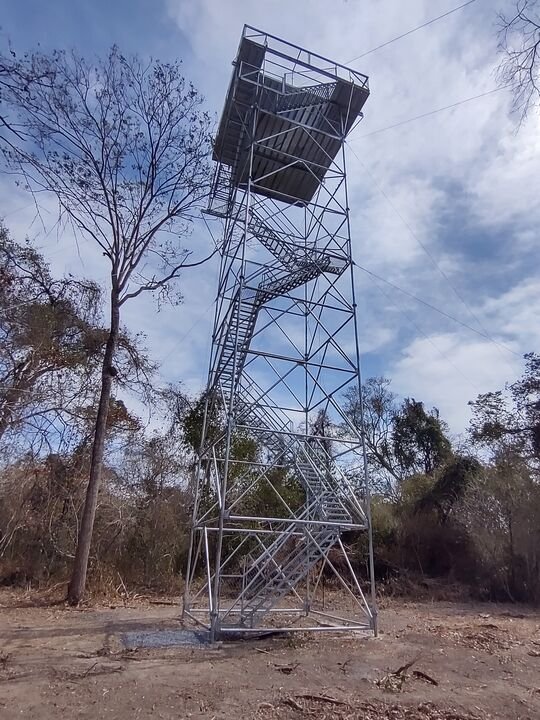
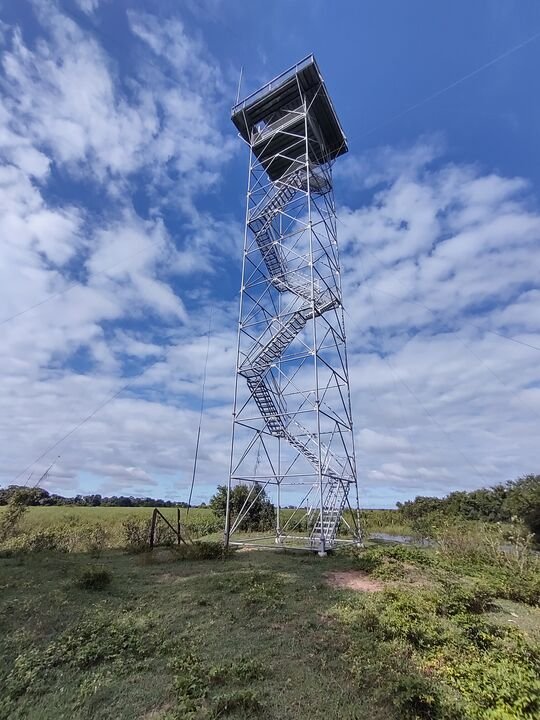
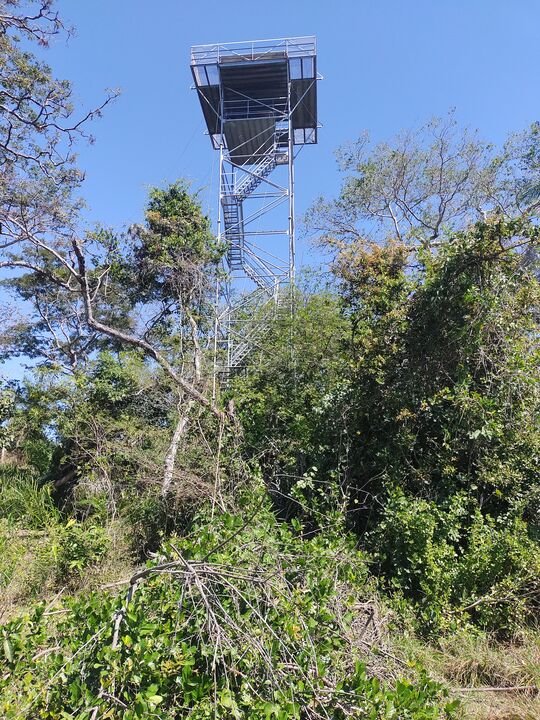
Each extra metre of height pushes the horizon further out. A short study by Eng. George S. Suli puts numbers on it.
In short
- 20 m tower: horizon at about 16.7 km
- 30.8 m tower: about 20.5 km
- That ring of extra view is about 440 km²
- Geometric horizon, flat terrain — vegetation and relief reduce it in practice
The question every client asks sooner or later is how much more they will see from a taller tower. To answer it without the noise of a particular site, picture the tower standing on a calm sea: no trees, no hills, only the curvature of the Earth. The observer's eye, the horizon and the centre of the Earth form a right triangle, and the distance to the horizon follows directly:
D = √( (R + h)² − R² )
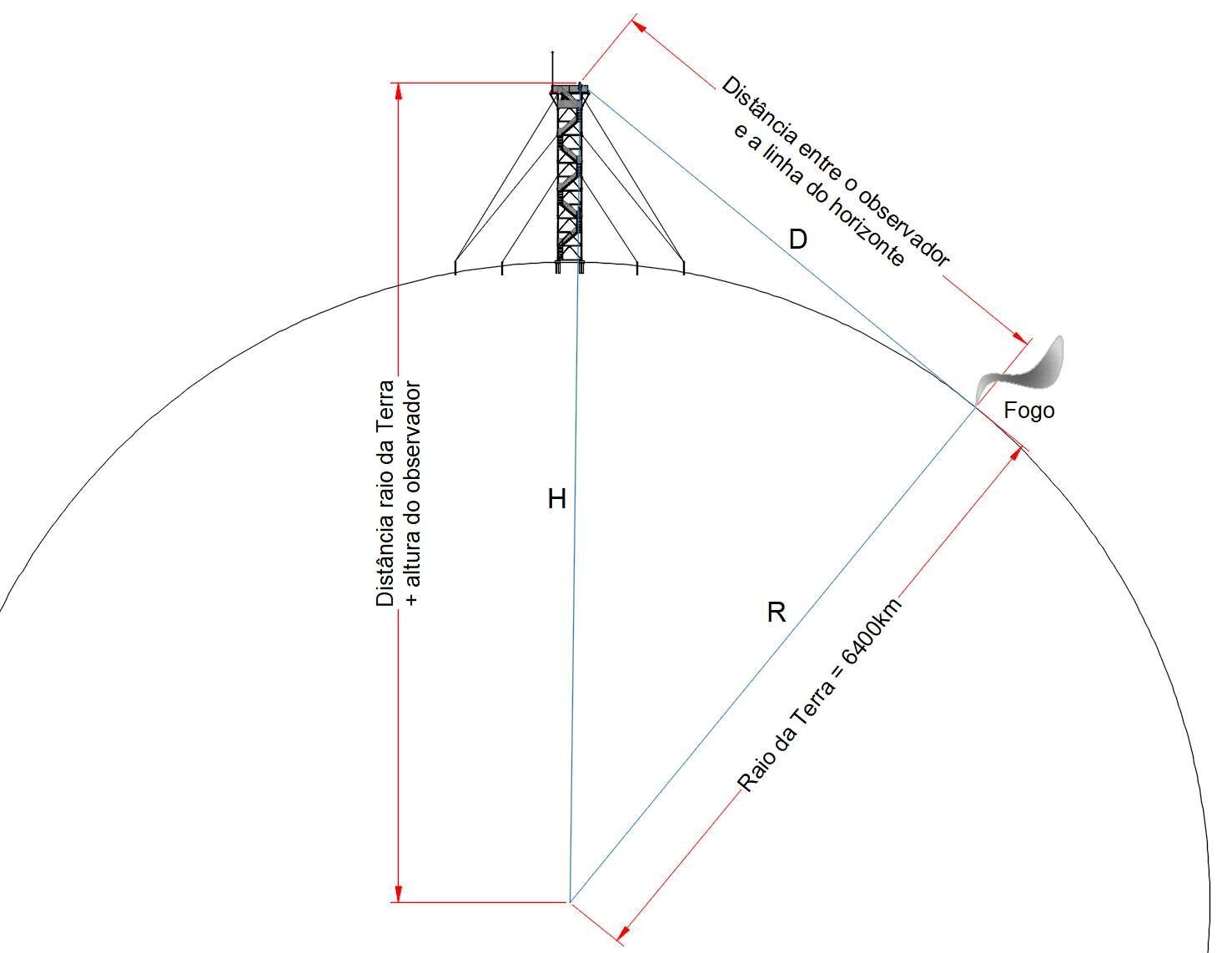
where R is the Earth's radius (6,378 km at the equator) and h is the height of the observer's eyes — the platform height plus about 1.8 m. A 20 m tower puts the horizon at about 16.7 km; adding five flights of stairs (30.8 m) pushes it to about 20.5 km. That extra 3.8 km of radius is a ring of roughly 440 km² of additional view.
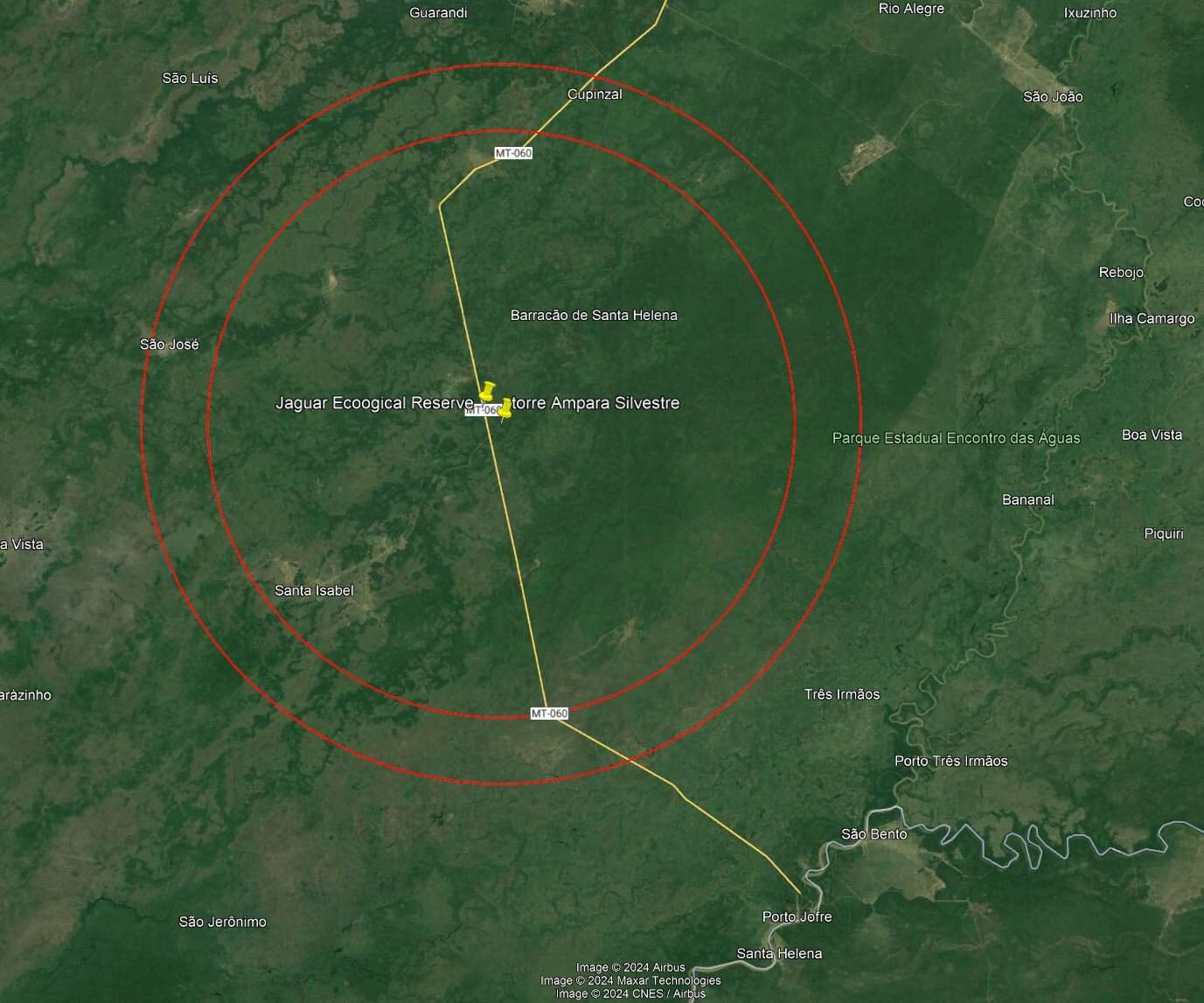
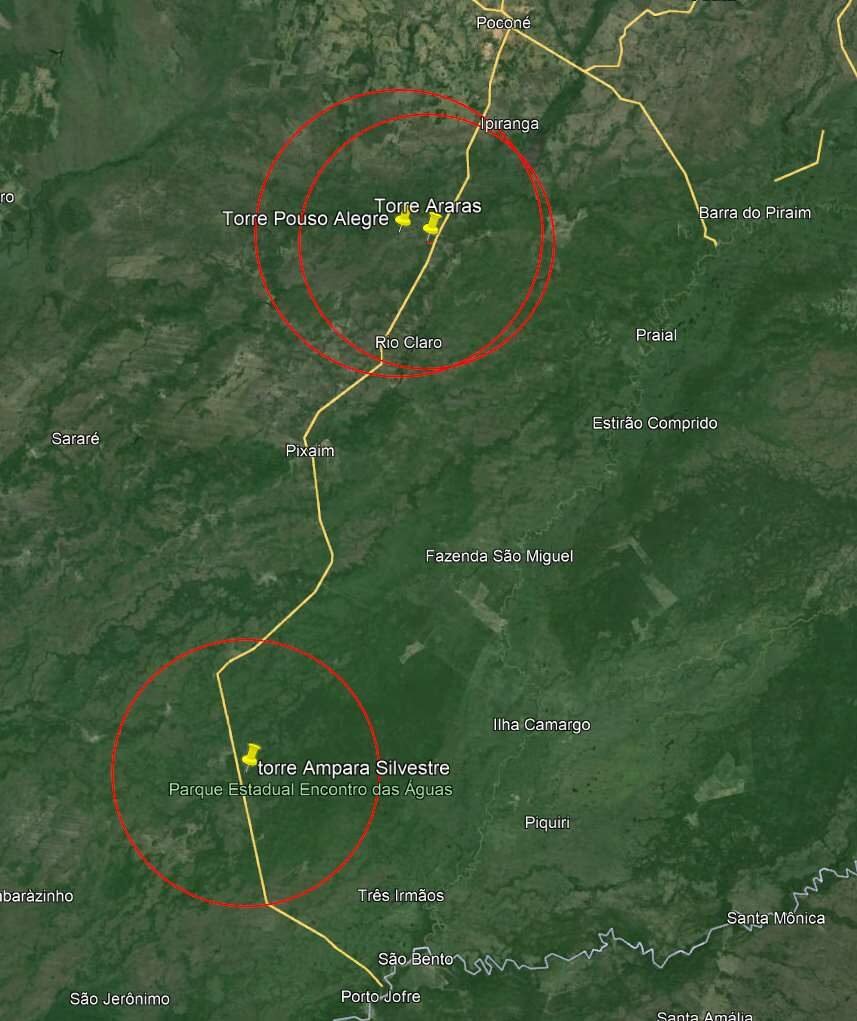
Smoke and clouds are visible much further away, because they stand well above the horizon line. Objects close to the horizon, on the other hand, are usually hidden by vegetation and relief — and the lower the tower, the more those obstacles matter. For two towers, the theoretical distance at which one top deck can see the other is the sum of their two horizon distances: a 30 m and a 20 m tower can, in principle, see each other's top platforms at about 35 km, with the rest of each structure hidden below the curve of the Earth.
These are geometric values over flat terrain. Atmospheric refraction usually stretches the visible horizon by a few percent; vegetation and terrain usually shorten it. Source: Study on the relationship between observation height and sighting distance, Eng. George S. Suli, 2024.
Try it
16.7 kmto the horizon (eye level 1.8 m above the deck)
| Platform | Eye level | Horizon |
|---|---|---|
| ground | 1.8 m | 4.8 km |
| 20 m | 21.8 m | 16.7 km |
| 30.8 m | 32.8 m | 20.5 km |
| 39.6 m | 41.4 m | 23.0 km |
| 50.6 m | 52.4 m | 25.9 km |